
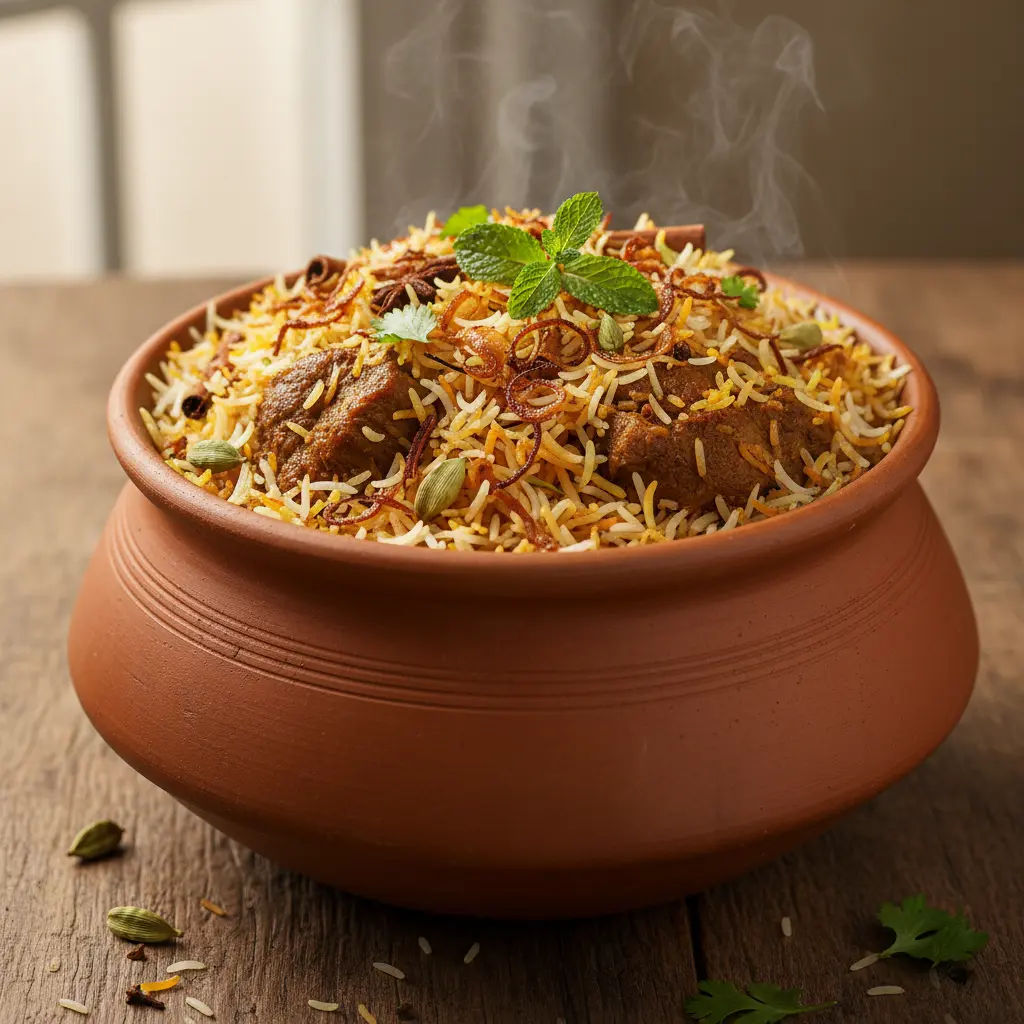
Tools You’ll Need
Having the right kitchen tools makes the kacchi biryani process much smoother. A heavy-bottomed pot is absolutely essential for even heat distribution during the dum cooking stage, while a tight-fitting lid and flour dough seal help trap the steam inside for that unmistakable depth of flavor.
- Dutch oven — ideal for dum cooking with even heat and a tight seal
- Cutting board — for prepping onions, potatoes, and herbs
- Mixing bowls — for marinating the mutton and preparing the saffron milk
About This Kacchi Biryani Recipe
What makes this kacchi biryani recipe truly special is the cooking technique itself. Unlike pakki biryani — where the meat is cooked separately before being layered — the kacchi method starts with raw, marinated meat placed at the bottom of the pot. Partially cooked (par-boiled) rice is then layered on top, and the pot is tightly sealed so everything finishes cooking together in fragrant steam. The result is meat that is incredibly tender and juicy, infused with every spice in the marinade, while the rice absorbs all those deep, complex flavors from below. The dish originated in Dhaka, Bangladesh, and is sometimes called Dhakai kacchi biryani, though similar versions are also beloved across India and Pakistan. You get fragrant long-grain basmati rice, fall-off-the-bone mutton, golden fried onions (beresta), and the signature yellow-orange saffron hue that makes this biryani so visually stunning.
Kacchi Biryani Ingredients
Quality ingredients are what elevate a good kacchi biryani into a great one. Use bone-in mutton for the most flavor — the bone marrow enriches the cooking liquid as the meat steams. Long-grain aged basmati rice is non-negotiable for proper texture; shorter grains will turn mushy during the dum cook. Here is everything you need for this recipe, which serves 6–8 people generously.
For the Mutton Marinade
-
-
- 1 kg bone-in mutton, cut into biryani-size pieces
- 1 cup full-fat plain yogurt
- 1½ tbsp ginger paste
- 1½ tbsp garlic paste
- 2 tsp biryani masala or garam masala
- 1 tsp red chili powder
- 1 tsp coriander powder
- ½ tsp turmeric powder
- 1 tsp cumin seeds
- 4 green cardamoms
- 2 black cardamoms
- 4 cloves
- 2 bay leaves
- 1 cinnamon stick (2-inch)
- 2 tbsp raw papaya paste (a traditional meat tenderizer — a key kacchi secret)
- 4 tbsp mustard oil or ghee
- Salt to taste
- ½ cup fried onions (beresta)
- 1 tbsp fresh lemon juice
-
For the Rice Layer
-
-
- 500 g aged basmati rice, soaked for 30 minutes
- 2 liters water
- 2 bay leaves
- 4 green cardamoms
- 1 cinnamon stick
- 4 cloves
- 1 tbsp salt
- 1 tbsp oil or ghee
-
For the Dum Layer & Garnish
-
-
- A generous pinch of saffron strands soaked in 4 tbsp warm milk
- ½ cup fried onions (beresta)
- 3 tbsp ghee, drizzled
- Fresh mint leaves and cilantro, for garnish
- 3 medium potatoes, halved and lightly fried (optional but traditional in Dhakai style)
- Flour dough (atta dough), to seal the pot lid
-
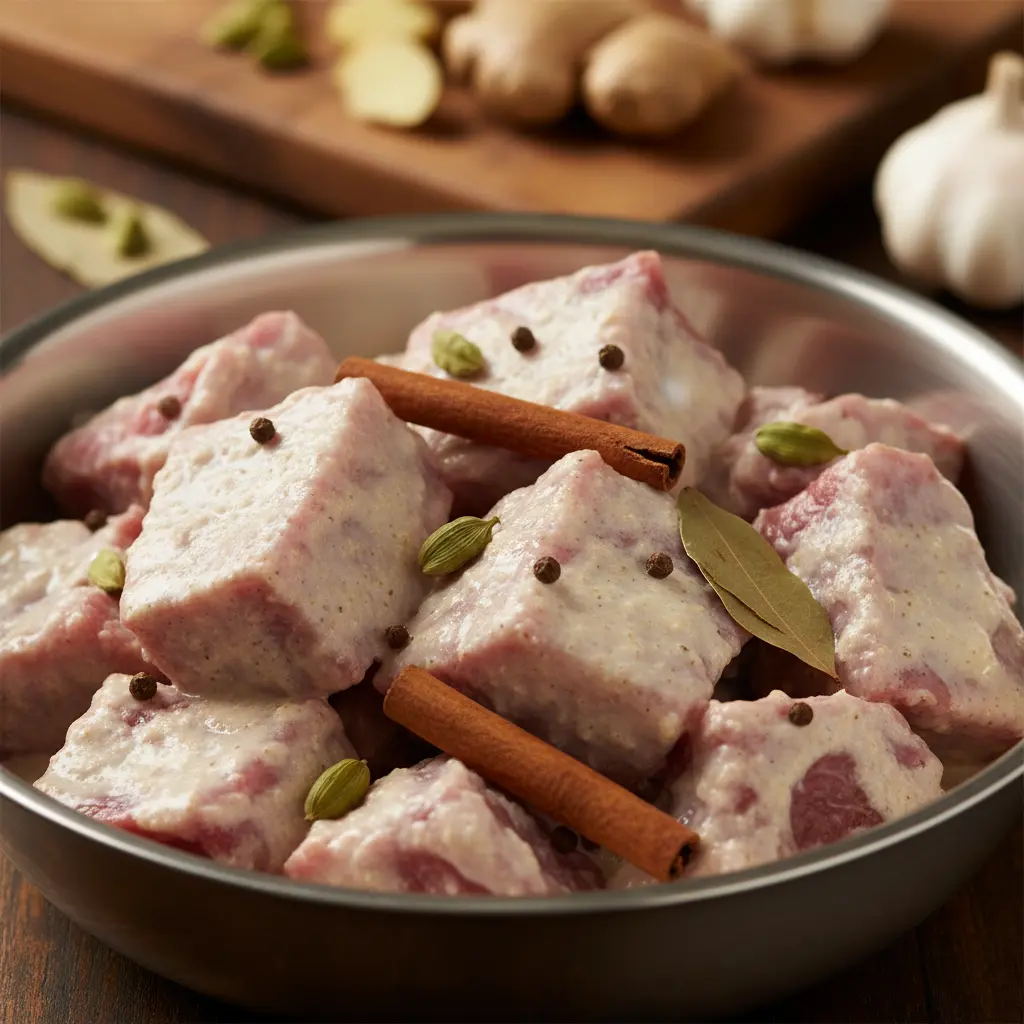
Equipment for Kacchi Biryani
The most important piece of equipment for kacchi biryani is a heavy-bottomed pot — a Dutch oven, a large cast iron pot, or a traditional handi works best. The heavy base prevents the bottom layer of meat from scorching during the long dum cook. You’ll also need a large stockpot for par-boiling the rice, and a rolling pin to make the flour dough used for sealing the pot. A flat griddle (tawa) or cast iron pan placed under the pot is very helpful for dum cooking on the stovetop, as it acts as a heat diffuser and prevents direct high heat from burning the base.
How to Make Kacchi Biryani
Making this kacchi biryani recipe takes time, patience, and a little planning — but the process is deeply satisfying and the results are truly spectacular. The key stages are marinating the meat (ideally overnight), par-boiling the rice, layering and sealing the pot, and the final slow dum cook. Follow these steps carefully for the best results.
Step 1 — Marinate the Mutton (Overnight or Minimum 4 Hours)
Combine the mutton pieces with all the marinade ingredients in a large bowl: yogurt, ginger and garlic paste, biryani masala, chili powder, coriander powder, turmeric, whole spices (cumin, cardamom, cloves, bay leaves, cinnamon), raw papaya paste, oil or ghee, fried onions, lemon juice, and salt. Mix thoroughly until every piece of mutton is well coated. Cover and refrigerate for at least 4 hours, though overnight marination produces the most tender, flavorful result. The raw papaya paste is the traditional tenderizer used in authentic Dhakai kacchi biryani — it breaks down the meat fibers so that even a tough cut becomes meltingly soft during the dum cook. As explained in this detailed kacchi mutton biryani guide, this overnight marination step is what truly defines the kacchi method and sets it apart from all other biryani styles.
Step 2 — Fry the Potatoes and Prepare Beresta (Fried Onions)
If using potatoes, halve them, season lightly with turmeric and salt, and shallow-fry in hot oil until golden on the outside. Set aside. For the beresta, thinly slice 3–4 medium onions and fry in batches in hot oil until deep golden and crisp. Drain on paper towels — they will crisp further as they cool. Beresta is both a garnish and an ingredient in the marinade, adding sweetness and texture.
Step 3 — Par-Boil the Basmati Rice (70% Cooked)
Bring a large pot of water to a rolling boil with the whole spices (cardamom, cloves, bay leaves, cinnamon), salt, and oil. Drain the soaked basmati rice and add to the boiling water. Cook for approximately 5–7 minutes, stirring gently once or twice. The rice must be 70–75% cooked — it should still have a firm bite in the center when you press a grain between your fingers. Drain immediately through a colander and spread it out briefly to stop cooking. Overcooking the rice at this stage will result in mushy biryani after the dum cook.
Step 4 — Layer the Pot
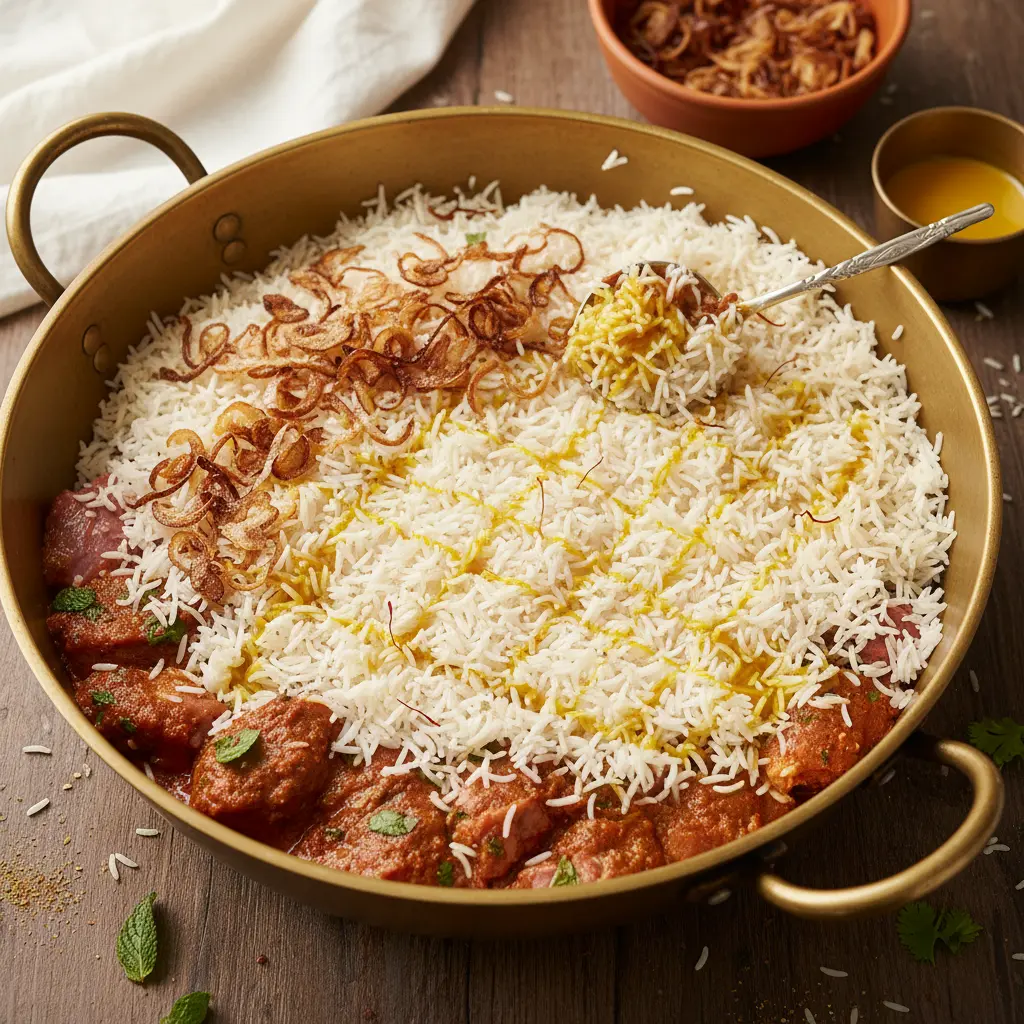
Take your heavy-bottomed pot or Dutch oven. Spread a thin layer of oil or ghee across the base. Add the marinated mutton along with all of its marinade in an even layer. If using potatoes, nestle them in and around the meat. Next, gently spread the par-boiled rice over the meat in an even layer, making sure to cover completely. Drizzle the saffron milk evenly over the rice — this gives the classic golden-orange hue on the top layer. Scatter the remaining beresta over the top, add fresh mint and cilantro, and finish with a generous drizzle of ghee.
Step 5 — Seal and Dum Cook
Roll out a thick rope of flour dough and press it around the rim of the pot. Place the lid firmly on top and press down so the dough creates an airtight seal. This is the dum seal — it traps all the steam inside so the meat and rice cook together in their own moisture and aromatic vapor. Cook on high heat for the first 10 minutes. Then place a flat tawa (griddle) or cast iron pan underneath the pot and reduce the heat to the lowest possible setting. Cook for 45–55 minutes on very low, slow heat. The finished biryani will have deep, fragrant aromas escaping from the sealed edges, and the rice will be perfectly cooked through. This method is beautifully described in this traditional Dhakai kacchi biryani breakdown, which highlights how the sealed steam environment is the defining characteristic of genuine kacchi cooking.
Step 6 — Rest and Serve
Once the dum cook is done, remove from heat and allow the pot to rest, sealed, for 10–15 minutes. This resting phase lets the steam settle and the flavors meld completely. Break the dough seal at the table for maximum dramatic effect — the fragrant steam that rises is one of the most memorable moments of serving kacchi biryani. Gently mix the layers from the bottom when serving so each plate gets both rice and mutton.
Kacchi Biryani Tips
Making kacchi biryani successfully comes down to a few critical details. Keep these tips in mind, especially if this is your first time attempting the recipe.
-
-
- Don’t skip the raw papaya paste. This is the single most important tenderizer for kacchi biryani. Without it, the raw mutton may not cook fully tender during the dum stage. If you can’t find raw papaya, substitute with kiwi paste or commercial meat tenderizer, though papaya gives the most authentic result.
- Par-boil rice to exactly 70–75%. If the rice is undercooked, it will stay hard. If it’s overcooked, it will turn mushy when steamed. Press a grain between your fingers — there should still be a firm white center, not raw but not fully soft.
- Use the tawa method for stovetop dum. Placing a flat iron griddle or tawa under the heavy pot is the traditional way to diffuse heat on a gas stovetop. It prevents scorching and ensures gentle, even heat. According to this lamb kacchi biryani guide by Saffron Alley, this heat diffusion technique is used in professional kitchens and home cooking alike across Bangladesh and India.
- Seal tightly and resist the urge to open the pot. Once sealed and on dum, do not lift the lid to check. Every time the seal is broken, precious steam escapes, and the cooking environment is disrupted. Trust the process.
- Rest before serving. The 10–15 minute rest after the dum cook is not optional — it allows the steam to redistribute evenly and the flavors to settle into the rice.
-
Kacchi Biryani Variations
While mutton is the most traditional protein for kacchi biryani, there are several well-loved adaptations that follow the same technique and layering approach.
-
-
- Beef Kacchi Biryani — Bangladeshi-style kacchi biryani is sometimes made with beef instead of mutton, particularly for large gatherings. Beef requires a longer marinade time (at least 8 hours) and a slightly extended dum cook of 60–70 minutes due to the denser texture of the meat.
- Chicken Kacchi Biryani — A lighter but equally flavorful adaptation using bone-in chicken pieces. The marinade is similar, but the dum cook time is reduced significantly — typically 30–35 minutes — since chicken cooks much faster than mutton. Use drumsticks and thighs for the best result.
- Lamb Kacchi Biryani — Lamb shoulder or leg works beautifully as a substitute for mutton, yielding a slightly sweeter, more delicate flavor. The cooking time is comparable to mutton.
- Dhakai Kacchi with Potatoes — The authentic Dhaka-style kacchi biryani always includes large halved potatoes that are lightly fried and then slow-cooked alongside the meat. The potatoes absorb the spiced cooking juices and become incredibly flavorful — don’t skip them if you want the full Dhakai experience.
-
How to Store Kacchi Biryani
Leftover kacchi biryani keeps very well in an airtight container in the refrigerator for up to 3 days. In fact, many fans of biryani argue that the flavors deepen and improve on the second day as the spices continue to meld. To reheat, the best method is to add a splash of water (1–2 tablespoons) to the biryani, cover tightly with foil or a lid, and warm it in a 325°F (160°C) oven for 15–20 minutes — this gently re-steams the rice without drying it out. Alternatively, reheat on the stovetop over very low heat with a splash of water, covered. For longer storage, kacchi biryani freezes well for up to 2 months; thaw overnight in the fridge before reheating. Avoid microwaving directly from frozen as it can make the rice rubbery and the meat dry.
Kacchi Biryani FAQ
What is the difference between kacchi biryani and pakki biryani?
The key difference lies in the state of the meat when it is layered with the rice. In kacchi biryani, the meat is placed raw and marinated into the pot, and it cooks together with the rice in the sealed dum environment. In pakki biryani, the meat is fully or partially cooked before being layered with cooked rice. Kacchi biryani is generally considered more technically challenging but delivers an exceptionally moist, tender, and flavorful result because the meat and rice cook in each other’s juices and steam.
Why is raw papaya paste used in kacchi biryani?
Raw papaya contains a natural enzyme called papain, which is a powerful meat tenderizer. Because the mutton in kacchi biryani is never pre-cooked, it must be tender enough to cook through to perfection during the dum stage — and raw papaya paste is the traditional, time-tested way to ensure that. Just 1–2 tablespoons added to the marinade makes a significant difference in the final texture of the meat.
Can I make kacchi biryani in the oven?
Yes, absolutely. The oven method is actually very effective and reliable for kacchi biryani because it provides consistent, gentle, all-around heat. After layering and sealing the pot with dough, place it in a preheated oven at 350°F (175°C) for 45–55 minutes. Many home cooks and restaurants also use a sealed foil cover under the lid for extra steam retention when baking.
How do I know when the kacchi biryani is fully cooked?
The most reliable signs are aroma and time. After the full dum cook time, you should smell deep, toasted spice aromas escaping from the sealed edges of the pot. When you break the seal, the rice on top should be fully cooked and slightly golden where it met the saffron milk. The meat should be pull-apart tender. If you’re uncertain, a digital thermometer inserted into the thickest mutton piece should read at least 160°F (71°C).
What do you serve with kacchi biryani?
Kacchi biryani is traditionally served with plain raita (yogurt sauce), a salad of thinly sliced onions and cucumbers, boiled eggs, and a wedge of lemon. For a fuller spread, add mirchi ka salan (a spicy pepper and peanut curry) on the side. A cold glass of lassi or sharbat is the classic beverage pairing.

Explore More Recipes
If you loved this kacchi biryani recipe, you’ll definitely enjoy these other hearty and flavorful dishes from the blog: