

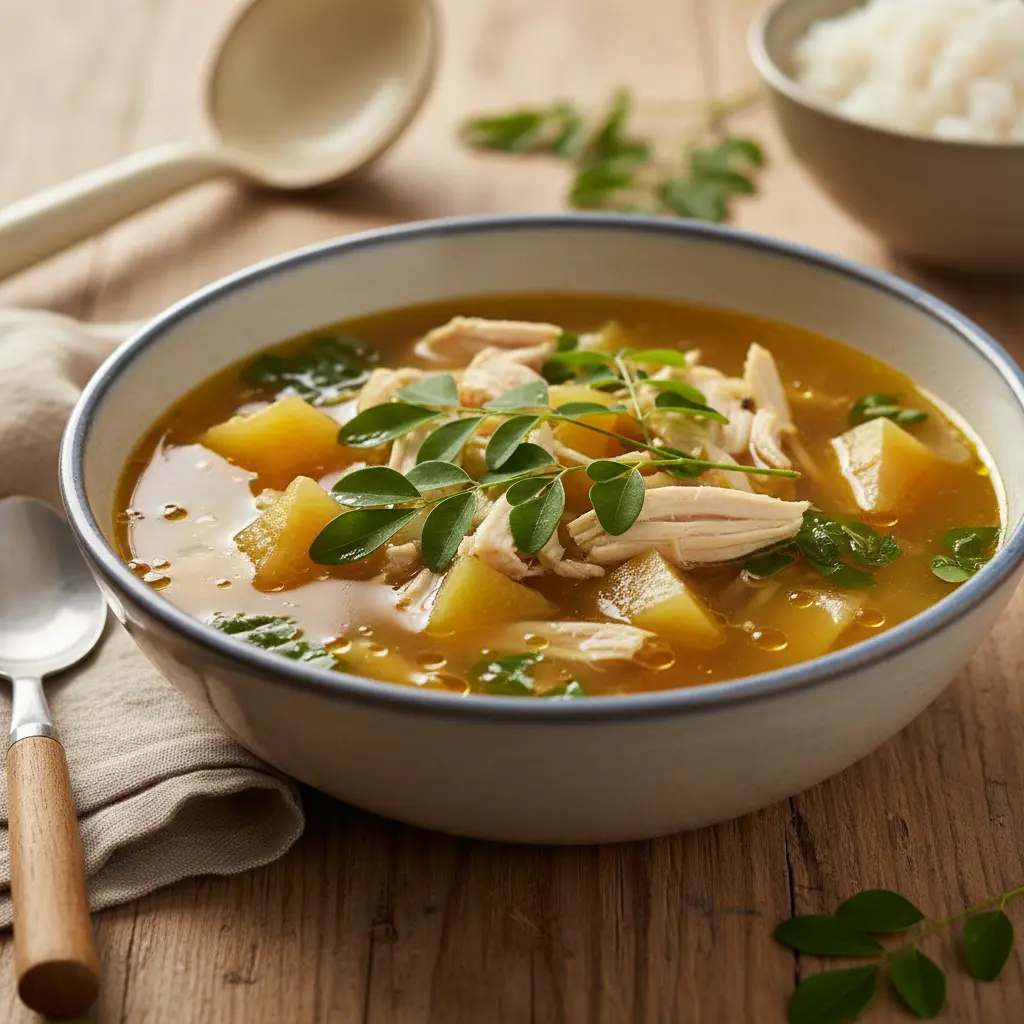
This chicken papaya recipe is one of the most beloved comfort dishes in Filipino cuisine — a light yet deeply savory soup known as Tinola, enjoyed by millions across the Philippines and Hawaiian communities alike. Studies show that ginger-based broths are among the top home remedies for soothing colds and boosting immunity, making this dish as nourishing as it is delicious. Whether you’re cooking it for the first time or revisiting a childhood favorite, this recipe delivers tender chicken, soft papaya, and a fragrant, soul-warming broth every single time.

Tools You’ll Need
- Stockpot — ideal for making a full batch of broth-based soup with room for all your ingredients
- Cutting board — essential for safely slicing papaya, chicken, and aromatics
- Chef’s knife — a sharp knife makes breaking down whole chicken and peeling green papaya much easier
About This Chicken Papaya Recipe
Chicken Tinola — or chicken papaya soup — is a traditional Filipino dish that traces its roots back centuries. It features bone-in chicken pieces simmered low and slow with green unripe papaya, fresh ginger, onion, garlic, and fish sauce in a clear savory broth. The green papaya absorbs the broth beautifully and softens into a tender, slightly starchy texture that’s completely different from ripe papaya. What makes this dish stand apart from other chicken soups is that distinctive ginger-forward warmth that hits you with every spoonful. It’s light but satisfying, wholesome but full of flavor, and incredibly easy to pull together on a weeknight. Popular throughout Hawaii as well as the Philippines, the chicken papaya recipe has earned its place as a true cross-cultural comfort classic.
Chicken Papaya Recipe Ingredients
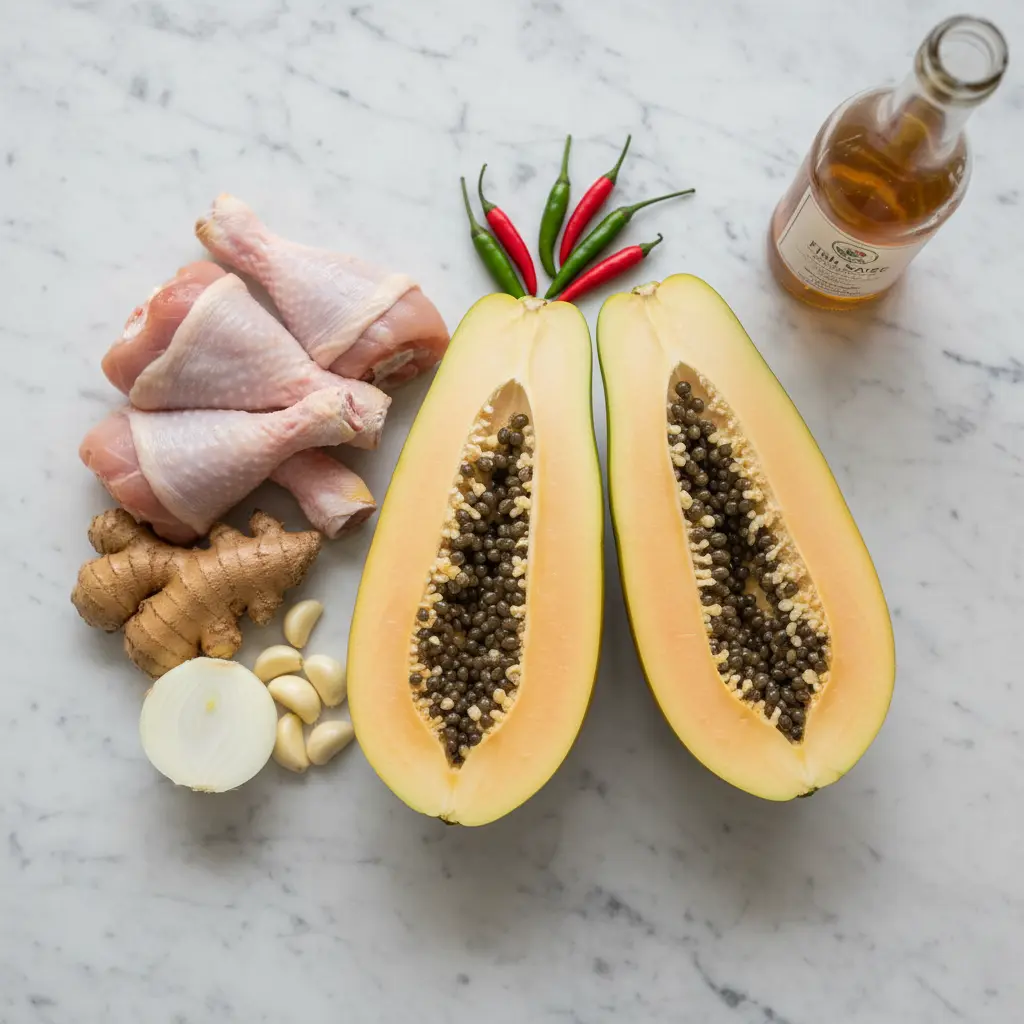
Here’s everything you’ll need to make a full pot (serves 4–6):
- 2 lbs bone-in chicken pieces (drumsticks, thighs, or a mix) — bone-in cuts add the most flavor to the broth
- 1 medium green (unripe) papaya — peeled, seeded, and cut into 1-inch cubes; green papaya is starchy and mild, perfect for soups
- 1 medium yellow onion, sliced
- 4 cloves garlic, minced
- 2-inch piece of fresh ginger, peeled and sliced thin — the heart of the flavor
- 2 tablespoons fish sauce (patis) — for that umami depth; substitute soy sauce for a milder version
- 6 cups water or chicken broth — broth gives a richer result
- 1 tablespoon neutral cooking oil
- Salt and black pepper to taste
- 2 cups fresh spinach or moringa leaves (malunggay) — added at the very end; both work beautifully
- 1–2 green chili peppers (optional) — adds a gentle, pleasant heat
Ingredient note: Green papaya is the key — do not substitute ripe papaya, which will turn mushy and sweet. Look for firm, fully green papaya at Asian grocery stores. If unavailable, chayote squash is a well-accepted substitute that holds up similarly in the broth.
Equipment for Chicken Papaya
This is a straightforward one-pot soup, so you don’t need much. A large stockpot or Dutch oven is your primary vessel. Make sure you have a sturdy cutting board and a sharp knife for breaking down the chicken and papaya. A ladle for serving and a wooden spoon for stirring round out the list. That’s genuinely all you need — this dish is wonderfully humble in its requirements.
How to Make Chicken Papaya Recipe
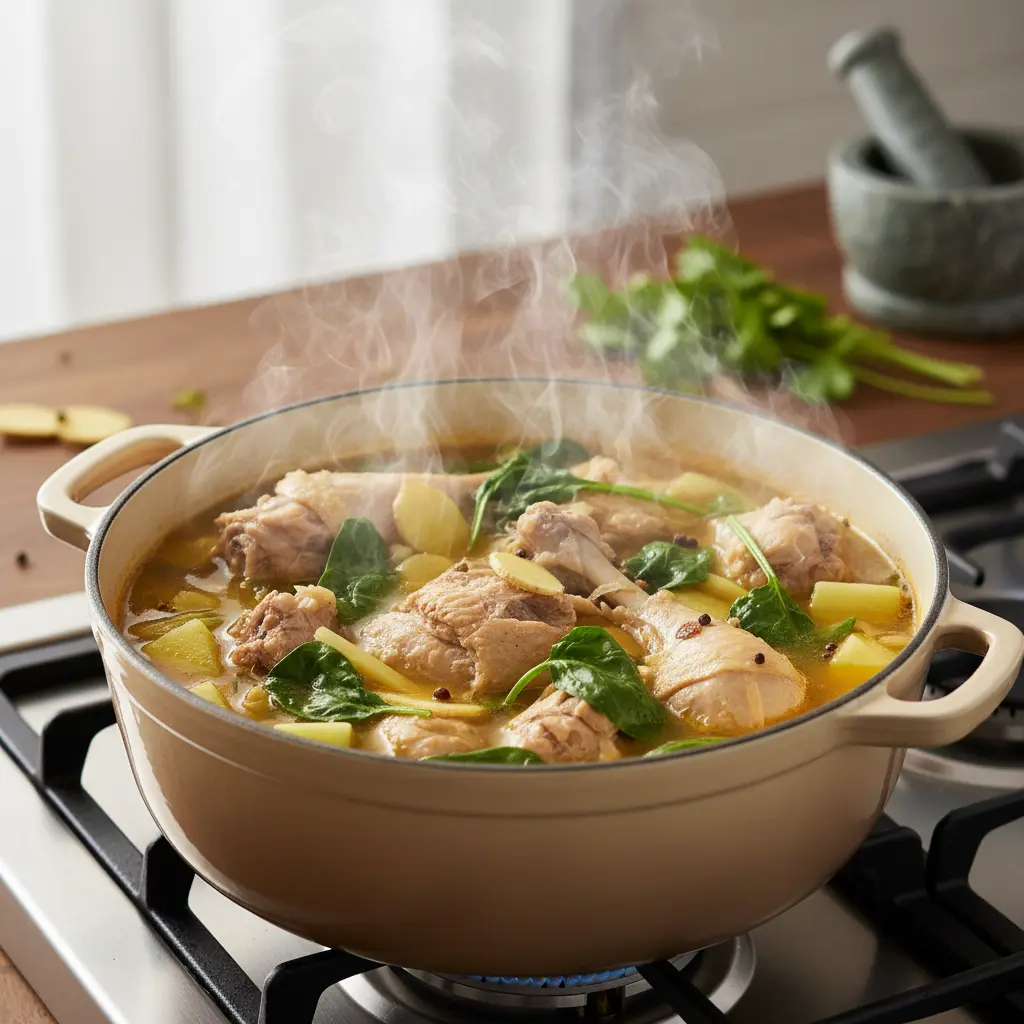
Follow these steps for a perfectly balanced chicken papaya soup:
Step 1: Sauté the aromatics
Heat the oil in a large stockpot over medium heat. Add the sliced onion and garlic, and cook for about 2–3 minutes until softened and fragrant. Add the ginger slices and stir for another minute. These aromatics are the flavor foundation of the entire dish, so don’t rush this step.
Step 2: Brown the chicken
Add the chicken pieces to the pot and let them sear lightly for about 3–4 minutes per side. You’re not cooking them through — you’re just developing a little color and flavor before the broth goes in. Season with a pinch of salt and pepper at this stage.
Step 3: Add liquid and fish sauce
Pour in the water or chicken broth and add the fish sauce. Bring everything to a boil over medium-high heat, then reduce to a gentle simmer. Skim any foam that rises to the surface during the first few minutes — this keeps the broth clear and clean-tasting.
Step 4: Simmer the chicken
Let the chicken simmer uncovered for 20–25 minutes until mostly cooked through and tender. The broth will deepen in flavor during this time. According to this Instant Pot chicken papaya guide, pressure-cooking the chicken first is a great shortcut for busy nights — cutting cook time down to under 30 minutes total.
Step 5: Add the papaya
Add the cubed green papaya to the pot and continue simmering for another 10–12 minutes until the papaya is fork-tender but still holds its shape. It should feel soft all the way through when pierced with a fork, similar to a cooked potato. This Hawaiian chicken papaya soup guide recommends adding the papaya in larger chunks if you prefer more bite in the final dish.
Step 6: Add greens and adjust seasoning
Turn off the heat and stir in your spinach or moringa leaves. They will wilt perfectly in the residual heat in just 1–2 minutes — don’t overcook them. Taste the broth and adjust with more fish sauce, salt, or a splash of calamansi or lime juice if desired.
Step 7: Serve
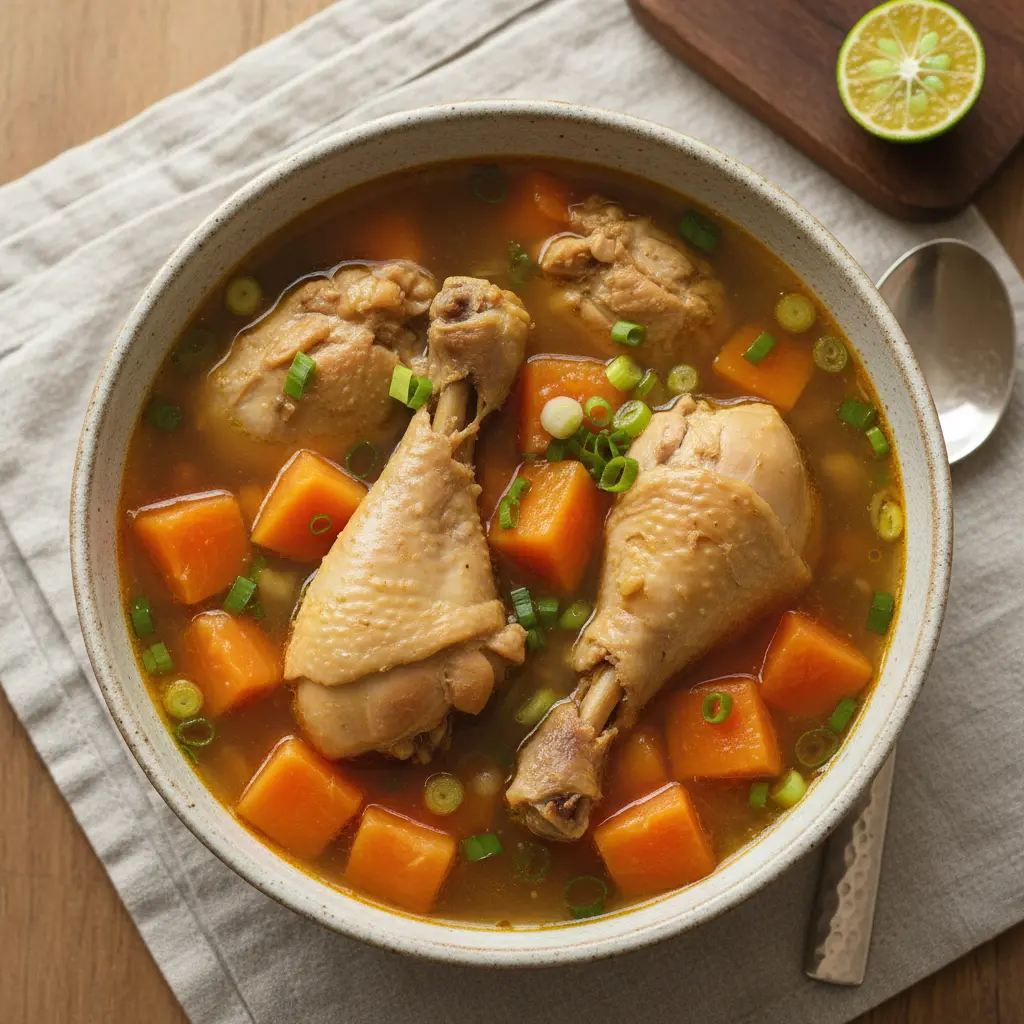
Ladle into deep bowls and serve immediately with steamed white rice on the side. The rice is not optional in most Filipino households — it soaks up that incredible broth and turns a simple soup into a full meal.
Chicken Papaya Recipe Tips
- Use bone-in, skin-on chicken. The bones release collagen and gelatin into the broth as they cook, giving the soup a silky, fuller body. Boneless chicken breasts work in a pinch, but the broth will be noticeably thinner and less rich.
- Don’t overcook the papaya. Green papaya cooks quickly. Add it in the last 10–12 minutes only. If you add it too early, it will completely disintegrate and turn the broth cloudy and starchy.
- Fish sauce is the umami key. Start with 2 tablespoons, taste, and add more as needed at the end. Different brands vary in saltiness, so season to your own palate. If you’re sensitive to salt, start with 1 tablespoon and build from there.
- Ginger quantity matters. A 2-inch piece is a good starting point, but if you love that warm ginger kick, go up to a 3-inch piece. Slice it thin so the flavor infuses quickly without harsh chunks in your soup. As noted in this papaya chicken with coconut milk variation, adjusting ginger level can completely transform the flavor profile of the dish.
- Chayote squash works as a substitute. If green papaya isn’t available locally, chayote is the most common and best-accepted substitute. It has a similar firm texture and mild flavor that holds up well in a simmered broth.
Chicken Papaya Recipe Variations
- Coconut milk version: Add 1 cup of full-fat coconut milk in the last 5 minutes of cooking for a creamy, mildly sweet broth. This is popular in certain regional Filipino variations and pairs beautifully with the ginger.
- Instant Pot / pressure cooker version: Sauté the aromatics using the sauté function, then pressure cook the chicken and broth for 10 minutes with a quick release. Add the papaya and simmer on the sauté function for another 8 minutes. Total active time drops to under 30 minutes.
- Spicy version: Add 2–3 whole green finger chilies (siling haba) to the broth as it simmers. They add a pleasant background heat without overpowering the delicate soup.
- Pork version: Swap the chicken for bone-in pork ribs or pork neck bones. Increase the initial simmering time to 35–40 minutes to ensure the pork is tender. The resulting broth is richer and slightly more robust.
How to Store Chicken Papaya
Allow the soup to cool completely before transferring it to an airtight container. Refrigerated, it will stay fresh for up to 3 days. The broth actually deepens in flavor overnight, making day-two chicken papaya soup arguably even better than freshly made. To reheat, warm gently in a pot over medium-low heat — avoid boiling hard as it can make the papaya too soft. For longer storage, freeze the broth and chicken separately from the papaya, as the papaya texture degrades significantly after freezing and thawing. Frozen broth and chicken will keep well for up to 2 months.
Chicken Papaya Recipe FAQ
What kind of papaya do I use for chicken papaya soup?
Always use green, unripe papaya — not the orange, sweet ripe kind. Green papaya has a firm, starchy texture similar to a mild squash, which makes it ideal for simmering in soups. It softens slowly without falling apart and absorbs the savory broth beautifully. Look for it at Filipino, Asian, or Caribbean grocery stores.
Can I use boneless chicken for this recipe?
Yes, but with caveats. Boneless chicken thighs work reasonably well and will cook faster (about 15 minutes), but the broth won’t have the same depth as when made with bone-in pieces. Chicken breasts can be used but tend to dry out with extended simmering — add them later in the process if using breasts.
What is the difference between chicken Tinola and chicken papaya soup?
They are essentially the same dish. “Tinola” is the Filipino name for this ginger-based chicken and papaya soup. “Chicken papaya soup” is the more common English-language and Hawaiian descriptor for the same recipe. Both use bone-in chicken, green papaya, ginger, fish sauce, and leafy greens in a clear broth.
What greens can I use instead of moringa (malunggay)?
Fresh spinach is the most readily available substitute and works wonderfully. Baby bok choy, watercress, or even chili leaves (dahon ng sili) are traditional alternatives used throughout the Philippines. All of them wilt quickly and should be added at the very end, off the heat.
Is chicken papaya soup healthy?
Very much so. This soup is naturally low in fat (especially if you skim the surface), high in protein from the chicken, and rich in vitamins C and A from the green papaya and leafy greens. The ginger and garlic add natural anti-inflammatory compounds. It’s regularly served to those recovering from illness in Filipino households for good reason.
Can I make this ahead of time?
Absolutely — in fact, many cooks prefer it made a day ahead. Store the soup in the refrigerator and reheat gently before serving. If making it well in advance, consider slightly undercooking the papaya so it doesn’t become too soft when reheated.